EN

Country and language

  • Our own warehouse in Stockholm
  • Tracked shipping across the EU
  • Delivery time shown at checkout

Scissors

The detail scissors are the instrument scissors — the same model that instrument catalogues call Mayo scissors — while the bandage scissors are the angled scissors with a blunt lower blade that cut dressings and clothing against the skin.

Here you will find three blade combinations of the 14 cm fine scissors, six bandage scissors with colour-coded handles and black blades, and the heavier trauma shears from North American Rescue. The instrument scissors are made of stainless steel; the bandage scissors are built to be carried in a pocket and used every day.

Filter and sort
Sort

Scissors — all products

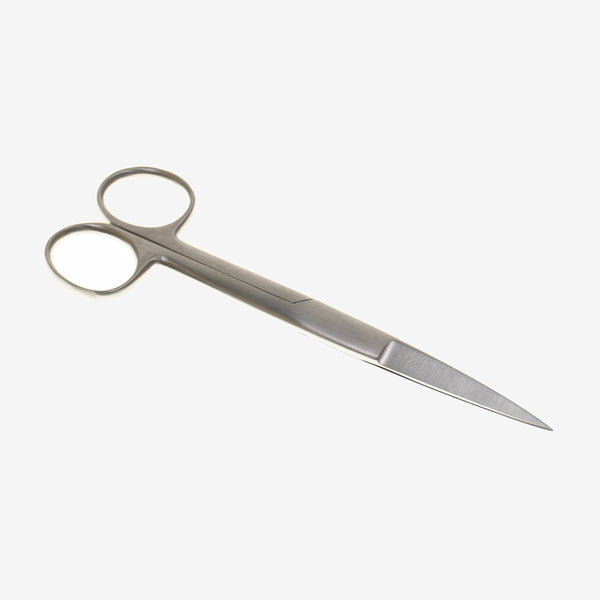
Detail scissors 14 cm sharpMedstuff
€6,95
Available

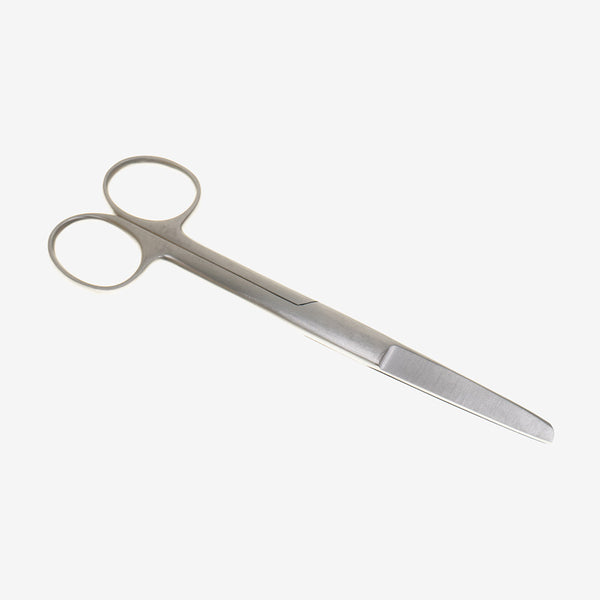
Detail scissors 14 cm blunt/sharpMedstuff
€6,95
2 left

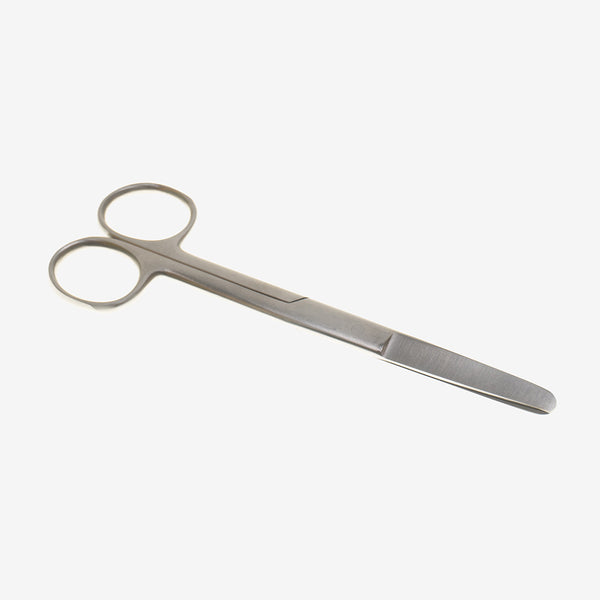
Detail scissors 14 cm bluntMedstuff
€6,95
Available

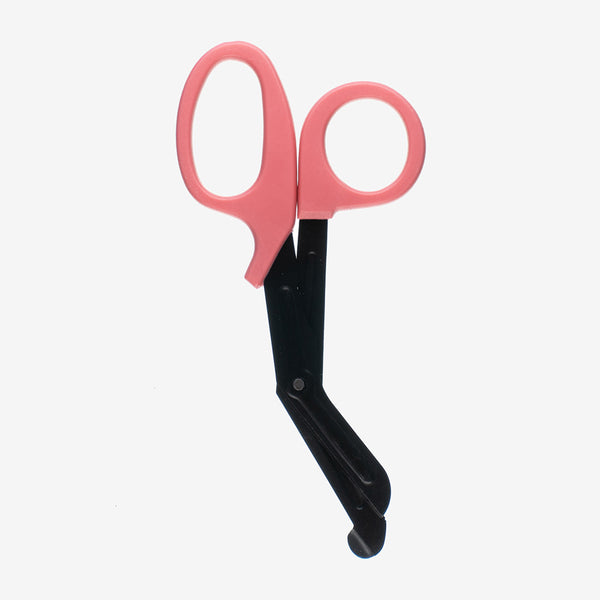
Bandage Scissors Pink Handle Black BladesMedstuff
€5,95
1 left

Bandage Scissors Purple Handle Black BladesMedstuff
€5,95
Temporarily out of stock

Bandage Scissors Green Handle Black BladesMedstuff
€5,95
Temporarily out of stock

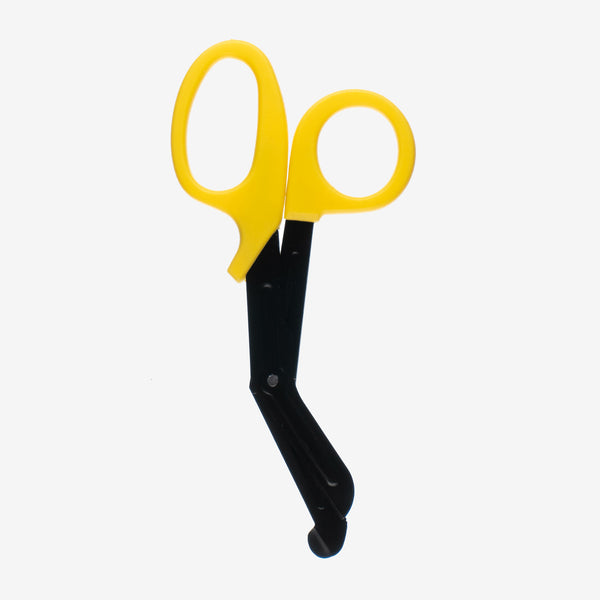
Bandage Scissors Yellow Handle Black BladesMedstuff
€5,95
Temporarily out of stock

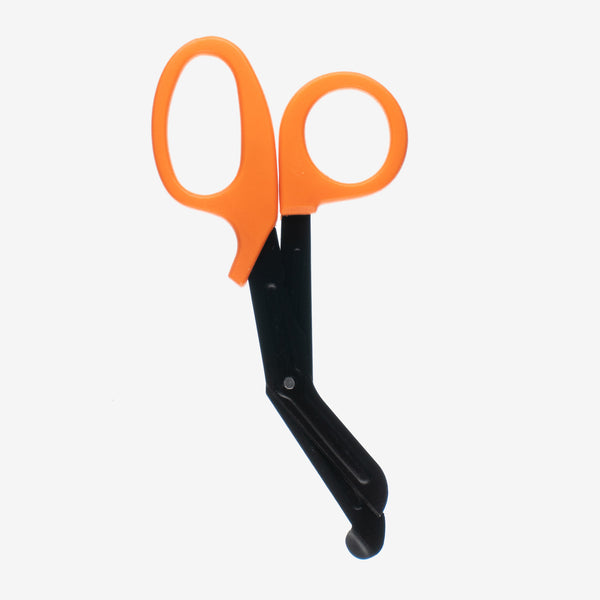
Bandage Scissors Orange Handle Black BladesMedstuff
€5,95
Temporarily out of stock

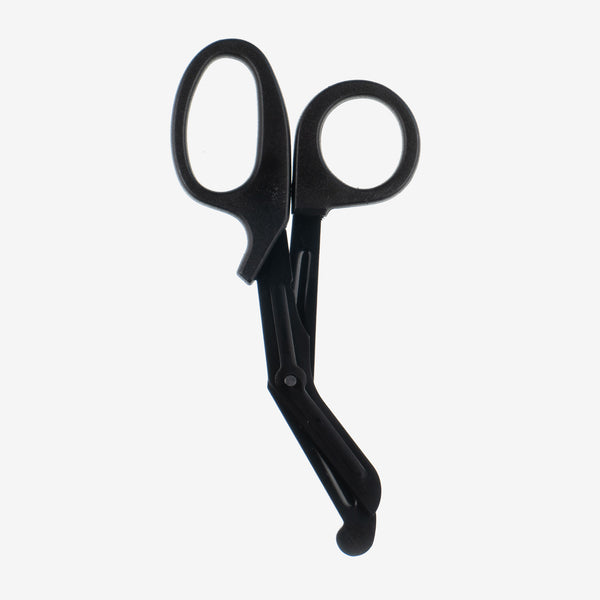
Bandage Scissors Black Handle Black BladesMedstuff
€5,95
Temporarily out of stock

Trauma Shears LargeNorth American Rescue
€15,95
Temporarily out of stock

Detail scissors — which are really Mayo scissors

"Detail scissors" is our shop's term. The model is the scissors that go by the name Mayo scissors in instrument catalogues, or simply surgical scissors. They are available here in three versions at 14 cm: sharp with two pointed blades, blunt-sharp with one of each, and blunt with two blunt blades. A blunt tip can be inserted without piercing and is the standard choice close to skin and dressings; sharp blades give more precision in the cut itself. If you only want one pair, blunt-sharp is the compromise that works for most things.

Bandage scissors — or Lister scissors

The angled scissors with a blunt, ball-shaped lower blade go back to the Lister scissors, named after Joseph Lister. On the ward they are simply called bandage scissors or utility scissors. The angle lets the blade lie flat against the skin while the hand is held above, and the blunt tip is the safety feature itself. Our six models have black blades and colour-coded handles in green, purple, pink, yellow, orange and black — the colour is the easiest way to keep personal scissors apart from the trolley's. See the full selection under bandage scissors.

Trauma shears

The trauma shears from North American Rescue are the heavier version of the same basic shape, dimensioned for clothing, straps and thicker material rather than for swabs and tape. They belong in the emergency bag and the ambulance pocket, not on the instrument tray.

Choosing the right pair

Instrument scissors and bandage scissors are not interchangeable: instrument scissors are sharp and fine and wear quickly on tape and textiles, while bandage scissors are too blunt for fine work. Most units have both. If you need dissecting and suture scissors in the Metzenbaum, Iris or Spencer models, you will find them under surgical instruments, together with forceps and needle holders.

Vanliga frågor om scissors

What is the difference between detail scissors and bandage scissors?

The detail scissors are instrument scissors with straight blades of equal length and a fine tip, intended for fine work on the instrument tray. The bandage scissors have an angled lower blade with a blunt, ball-shaped tip designed to be slid between dressing and skin. They therefore handle two different tasks and do not replace each other.

What do sharp, blunt and blunt-sharp mean?

The designation describes the tips of the blades. Sharp means both blades end in a point, blunt that both are rounded, and blunt-sharp that the scissors have one of each. Blunt tips are the careful choice close to skin and materials, sharp ones give precision. The blunt-sharp combination is the most versatile.

Which scissors should I keep in my pocket?

Bandage scissors. They are blunt at the tip, withstand frequent use and are cheap enough to be replaced when they become dull. The instrument scissors belong on the tray, where they are cleaned and handled with their set. If your bag needs to cope with clothing and straps, choose trauma shears instead.

Can the scissors be sterilised?

The instrument scissors are made of stainless steel and withstand repeated reprocessing with their set. Bandage scissors and trauma shears with fitted handles are handled according to the manufacturer's instructions for the individual scissors, which determine which cleaning and sterilisation apply. Working scissors are also replaced when the edge has lost its sharpness rather than being resharpened.