EN

Country and language

  • Our own warehouse in Stockholm
  • Tracked shipping across the EU
  • Delivery time shown at checkout

Bandage scissors

Bandage scissors have an angled lower blade with a blunt, ball-shaped tip that can be slid between dressing and skin. In instrument catalogues the model is called Lister scissors — in everyday speech simply bandage scissors or heavy-duty scissors.

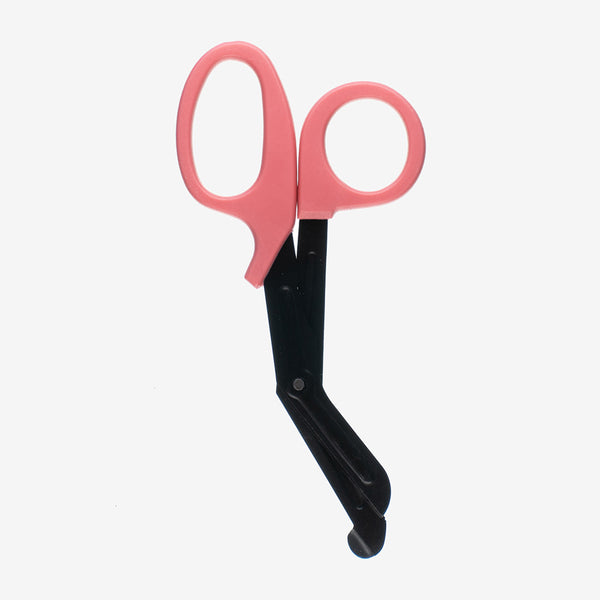
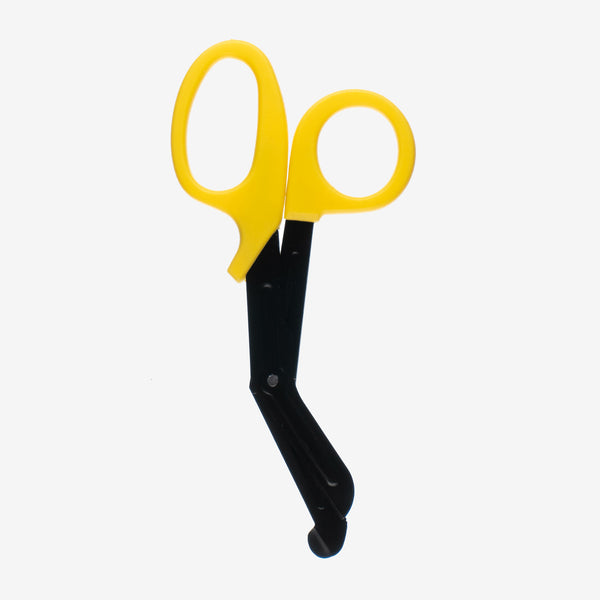
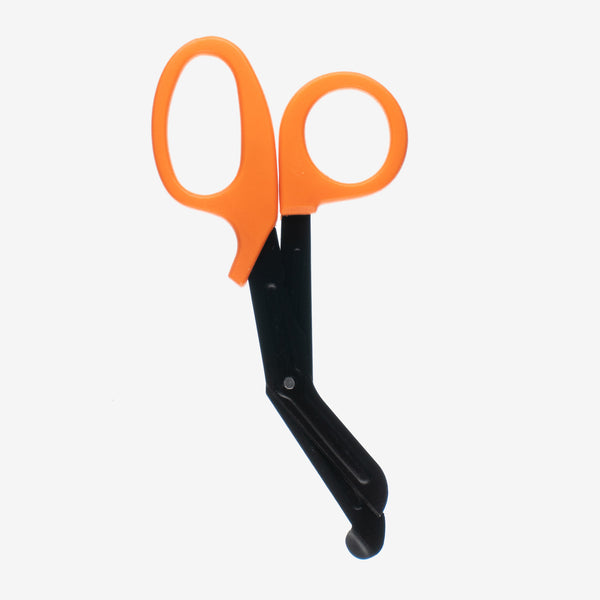
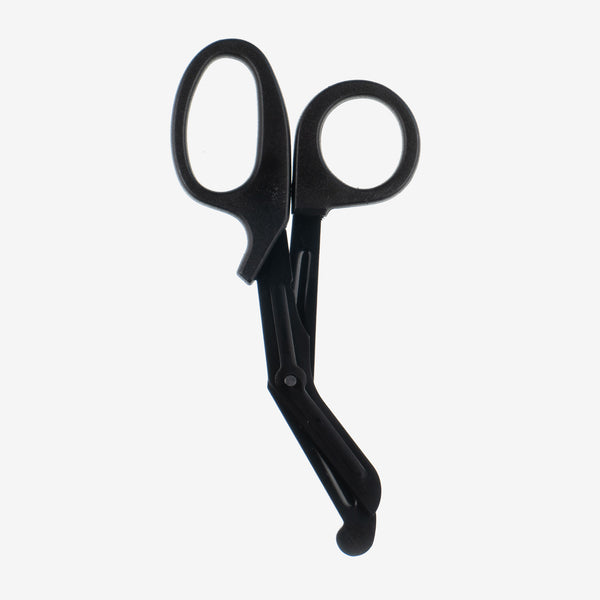
Six scissors of the same model with black blades and a colour-coded handle in green, purple, pink, yellow, orange and black. The shape is the same in all six: an angled lower blade, a blunt tip and a handle made to sit in your breast pocket for a whole shift.

Filter and sort
Sort

Bandage scissors — all products

Bandage Scissors Pink Handle Black BladesMedstuff
€5,95
1 left

Bandage Scissors Green Handle Black BladesMedstuff
€5,95
Temporarily out of stock

Bandage Scissors Purple Handle Black BladesMedstuff
€5,95
Temporarily out of stock

Bandage Scissors Yellow Handle Black BladesMedstuff
€5,95
Temporarily out of stock

Bandage Scissors Orange Handle Black BladesMedstuff
€5,95
Temporarily out of stock

Bandage Scissors Black Handle Black BladesMedstuff
€5,95
Temporarily out of stock

What the angle and the blunt tip do

The lower blade is angled away from the line of the scissors and ends in a rounded flat tip. This lets the blade lie flat against the surface while the hand is held a little above — and means the tip does not pierce when it is slid under dressings, tape or fabric. That is the whole difference from ordinary scissors, and the reason bandage scissors have looked more or less the same since Joseph Lister gave the model its name.

The colour coding is not just for looks

Bandage scissors go missing. They are lent out, put in the wrong pocket and end up on the wrong trolley. With six colours, each staff member can have their own, or the scissors can be colour-coded by room, trolley or bag. The colour is in the handle and the blades are black on all of them — so the choice is only about which code you want, not about function.

Where they belong

In the breast pocket, on the care trolley, in the first aid bag and in the teaching room. Bandage scissors are an everyday working tool that should be close at hand, not a tray instrument that is unpacked for a procedure. If the scissors need to get through clothing, straps and heavier material, the trauma shears under scissors are the right tool, and the instrument scissors in the Metzenbaum, Iris and Spencer models are under surgical instruments.

Vanliga frågor om bandage scissors

What makes bandage scissors different from ordinary scissors?

The angled lower blade and the blunt, ball-shaped tip. The angle lets the blade lie flat against the surface while the hand is held above, and the tip is rounded so that it does not pierce when the scissors are slid under a dressing. Ordinary office scissors have neither the angle nor the protected tip.

Can bandage scissors cut through clothes and belts?

Fabric and thinner garments are fine, but straps, belts and heavier material are another matter. For those there are trauma shears, which are more robustly built in both blades and handles. If you use bandage scissors on material that is too heavy, the edge will dull faster than it otherwise would.

Can bandage scissors be sterilised?

Follow the manufacturer's instructions for the individual scissors — they determine which cleaning and sterilisation applies. Bandage scissors are working scissors that are cleaned often and replaced when the edge has lost its sharpness; that is why they are sold individually and in six colours rather than as a set.