EN

Country and language

  • Our own warehouse in Stockholm
  • Tracked shipping across the EU
  • Delivery time shown at checkout

Surgical instruments

Instruments are easiest to sort by task: artery forceps and clamps hold, needle holders guide the suture needle, scissors cut tissue, sutures or dressings, and forceps grip — with or without teeth.

A basic range for clinics, health centres and training, mostly from Medipharchem: Pean, Kocher and Mosquito artery forceps, needle holders in Mayo-Hegar, Olsen-Hegar and Mathieu models, Metzenbaum and Iris scissors, Adson and DeBakey forceps, scalpel handles, ear instruments, kidney dishes and instrument boxes.

Filter and sort
Sort

Surgical instruments — all products

Lister Bandage Scissors 18 cmMedipharchem
€11,95
1 left

Surgical scissors curved 14 cm bluntMedipharchem
€6,95
3 left

Surgical scissors curved 11 cm bluntMedipharchem
€6,95
4 left

Surgical scissors sharp-sharp curved 14 cmMedipharchem
€6,95
4 left

Surgical scissors curved 14 cm sharp/bluntMedipharchem
€6,95
2 left

Surgical scissors straight 16 cm sharpMedipharchem
€8,95
3 left

Surgical scissors straight 16 cm sharp/bluntMedipharchem
€8,95
3 left

Micro forceps, sharp, with guide pin 14 cmMedipharchem
€5,95
Available

Troeltsch Ear and Nasal Forceps Curved 13 cmMedipharchem
€7,95
5 left

Lucae ear forceps, bayonet-shaped, 15 cmMedipharchem
€8,95
4 left

Tick forceps, squeeze model, 9 cmMedipharchem
€5,95
Available

Tick forceps cross-action model 9 cmMedipharchem
€5,95
4 left

Graefe iris forceps, curved, 11 cmMedipharchem
€10,95
2 left

Ewald dressing forceps anatomical, ward grade – 12cmMedstuff
€3,95
5 left

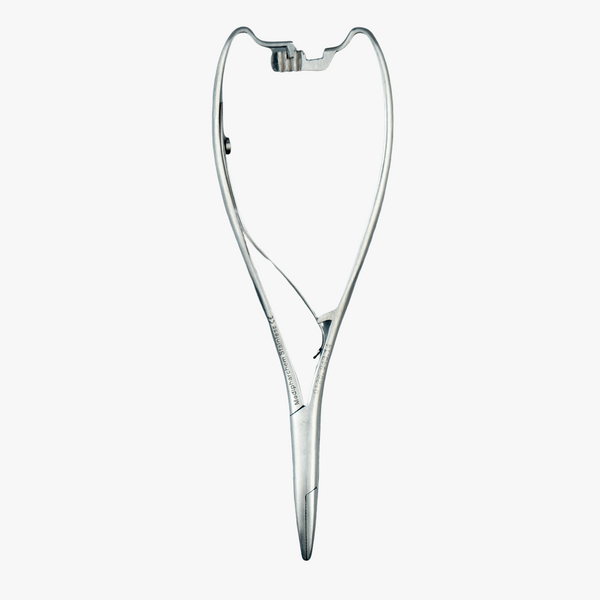
Needle holder Olsen-Hegar 14cm, stainless steelMedstuff
€24,95
5 left

Mathieu needle holder 17 cmMedstuff
€27,95
Available

Mathieu needle holder 14 cm straightMedstuff
€28,95
5 left

Lister Bandage Scissors 14 cmMedstuff
€6,95
Available

Vitri Pointed Forceps Metal 12 cmVitri
€2,95
Available

Popular
Vitri Bandage Scissors 15 cmVitri
€2,95
Available

Popular
Vitri Bandage Scissors 18 cmVitri
€3,95
Available

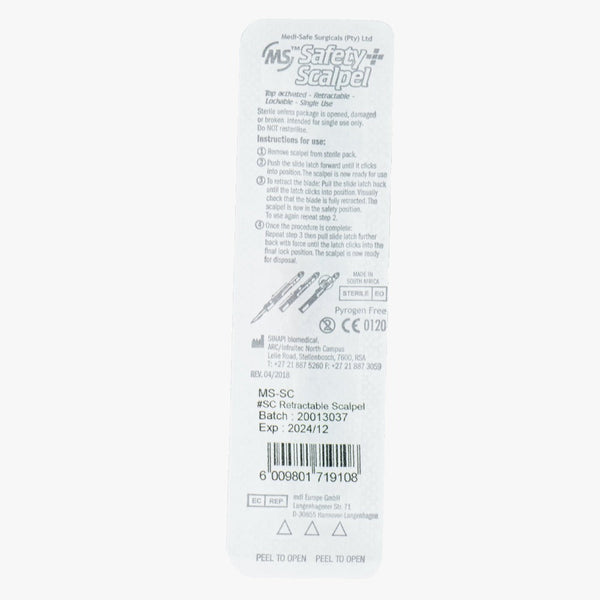
Medi-Safe safety scalpel for suture removalMedi-Safe Surgicals
€11,95
Available

ForcepsMedstuff
€8,95
Temporarily out of stock

All 119 products are shown

Artery forceps and clamps

Three models cover most needs. Pean has smooth, cross-serrated jaws without teeth and comes in 14, 16 and 18 cm — the workhorse clamp that also serves as a tubing clamp. Kocher looks the same but has 1x2 teeth at the tip and does not let go of tougher tissue as easily. Mosquito is the small, fine model at 12 cm, straight or curved, for confined fields. All three lock with a ratchet handle with several positions, so the grip can be adjusted.

Needle holders — and needle drivers

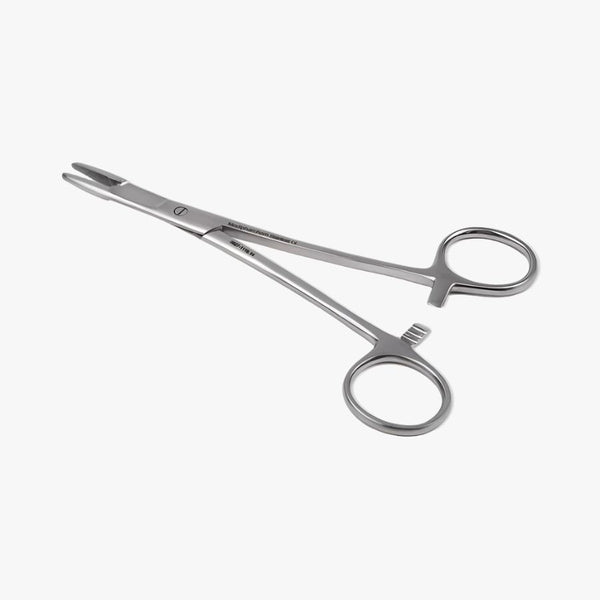
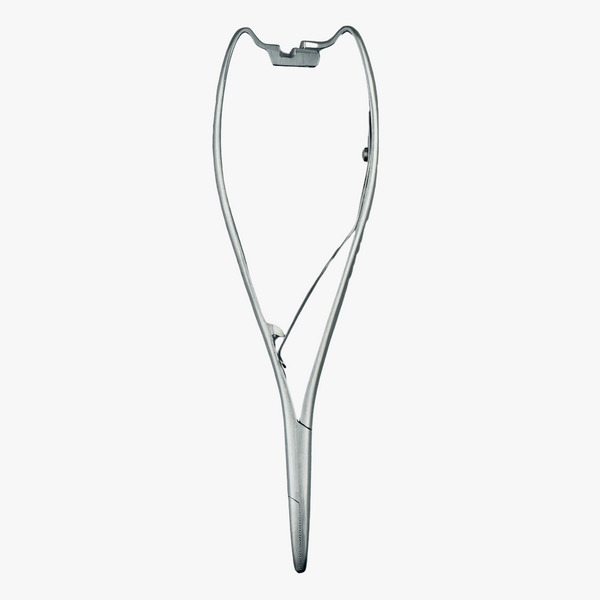
The two words mean the same thing and catalogues use both. Mayo-Hegar is the standard model with ring handles and broad jaws. Olsen-Hegar has built-in scissors behind the jaws, so needle driving and cutting the suture are done with one and the same instrument. Crile-Wood is slimmer and intended for finer suture material, and Mathieu has a curved handle where the ratchet locks and opens by squeezing the grip. The full range can be found under needle holders.

Scissors — three tasks, three models

Metzenbaum is the long, narrow-bladed dissecting scissors in 14, 23 and 28 cm. Iris is the short, sharp scissors at 11 cm for fine work, and Spencer stitch scissors has a hook in the lower blade that goes under the stitch. The surgical scissors come straight or curved, with sharp or blunt blades in various combinations. For dressings there are Lister scissors, the bandage scissors with an angled, blunt lower blade. See scissors and bandage scissors.

Forceps

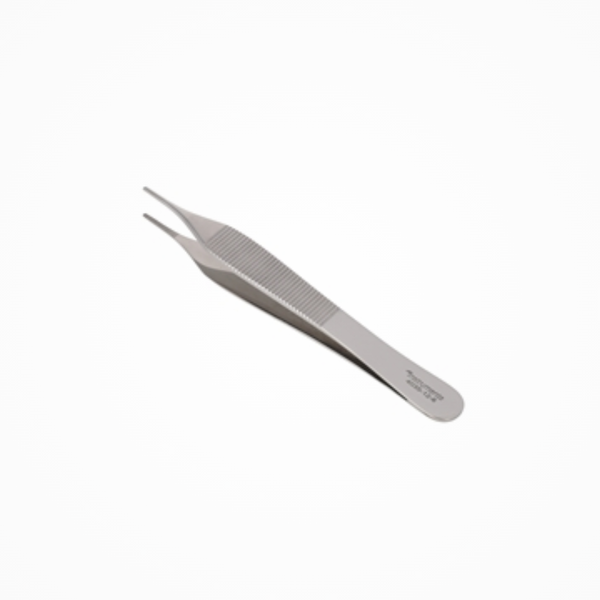
Toothless anatomical forceps — in catalogues called dressing forceps — grip swabs, tape and materials. Surgical tissue forceps have 1x2 teeth and hold tissue with light pressure instead of crushing it. DeBakey has finely serrated jaws without teeth and grips gently. The long models with ratchet — Maier dressing forceps, Foerster sponge-holding forceps and Magill catheter forceps — are made to reach deep. See forceps.

Ear, nose and examination

Hartmann nasal speculum, Lucae bayonet-shaped ear forceps, Troeltsch ear and nasal forceps, ear hooks in Roser and Day models, Billeau ear loop and an aluminium ear irrigation cup. The instruments complement the ranges in examination equipment and penlights.

Measuring, probing and special instruments

Pulse watches with a 15- or 30-second scale and 1.5-metre tape measures are among the things that get left in pockets and lost — they are cheap enough to have several of. The grooved director is a probe with a longitudinal groove in the shaft, and Buck and Quire are the fine instruments for foreign bodies. Schroeder-Pozzi tenaculum forceps are available for the gynaecological set.

Scalpel handles, storage and care

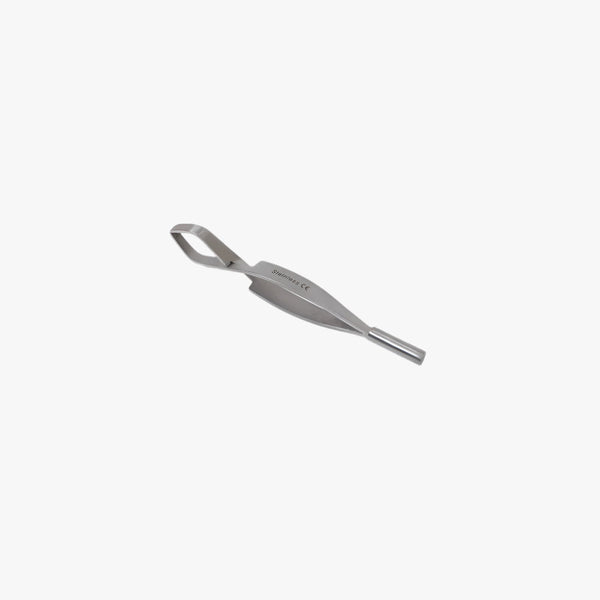
Scalpel handle no. 3 takes the smaller blades and no. 4 the larger ones — the handle is reusable, the blade is not. Michel clip forceps and Collin clip remover belong with the skin clips, and the safety scalpel from Medi-Safe is intended for suture removal. Instrument boxes, a storage jar and kidney dishes keep the set together between uses. Most of the instruments are made of stainless steel and withstand repeated cleaning; follow the manufacturer's instructions and your own routine for disinfection and sterilisation.

Vanliga frågor om surgical instruments

What is the difference between a Pean and a Kocher?

The jaws. The Pean is toothless and cross-serrated, while the Kocher has 1x2 teeth at the tip that bite into the tissue and make the grip firmer. The Pean is therefore used on things that cannot tolerate teeth, such as tubing and loose tissue, whereas the Kocher is chosen when the clamp has to stay on something tougher.

Is it called a needle holder or a needle driver?

Both are established names for the same instrument. Needle holder is the most common term in instrument catalogues, and needle driver is used in parallel. The differences between the products lie in the model — Mayo-Hegar, Olsen-Hegar, Crile-Wood or Mathieu — not in the word.

What length should the instrument be?

Length governs reach, not quality. 12–14 cm is standard for superficial, close work, 16–18 cm gives more distance between hand and field, and 20–28 cm is available for instruments that need to reach deep, such as Metzenbaum dissecting scissors and the sponge-holding forceps. Choose according to working distance.

Can the instruments be sterilised?

Most are made of stainless steel and designed to be cleaned and sterilised over and over again. Follow the manufacturer's instructions for each instrument and your own unit's routine. There are exceptions: the safety scalpel is a single-use product, and the blade of the scalpel handle is always replaced.